Why Familiar Routines Change at the Edges
Why familiar routines change at the edges: spot the small interruptions reshaping a habit and adjust its cue or timing without starting over.

You still make tea after work, but lately the kettle goes on after you have answered a message, put away a bag, or remembered one more errand. That is how familiar routines change at the edges: the central action stays recognizable while its cue, timing, or place quietly shifts. If you want to know whether a routine is changing or simply having an uneven week, look at the small arrangements around it before declaring the whole thing broken.
Why do familiar routines change at the edges?
A routine is not just an action repeated. It also depends on what tends to happen just before it, what makes the action convenient, and what usually follows. A cup beside the kettle, a clear patch of counter, or the moment you come through the door can all help an action begin without much negotiation.
When one of those conditions changes, the routine often bends rather than disappears. A new meeting may push lunch later; a crowded counter may send the tea-making ritual to another part of the kitchen. The change can be small enough to escape notice until the old cue no longer seems to work.
That does not automatically mean the routine needs repair. Repeated adjustments can be a sensible response to a changed day. The useful question is whether the routine still serves its purpose, and if not, which part is making it harder to begin.
What if the routine starts later and later?
A drifting start time often begins with a cue that has become less dependable. Perhaps you used to stretch after setting down your work bag, but now the bag lands wherever there is room and you go straight to the kitchen. The stretch itself may be perfectly manageable; its old starting signal has simply become vague.
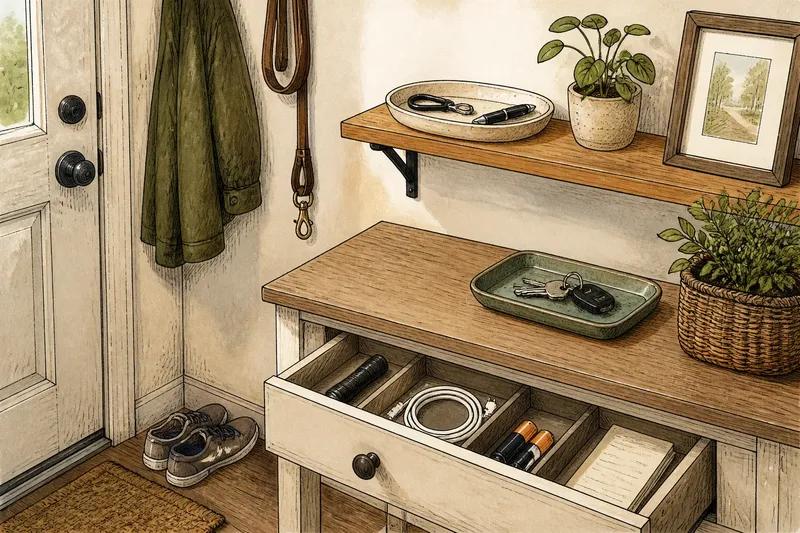
Try naming the cue in observable terms. “After work” can cover a long, unruly stretch of time; “after I hang my coat” points to a particular event. If that event no longer happens reliably, choose one that does, such as putting your keys in their bowl or closing your laptop.
Keep the action modest while the new cue settles in. If the old routine included a long stretch, one familiar movement may be enough to reconnect cue and action. There is no need to compensate for every missed day with an ambitious return performance.
What if the routine keeps getting interrupted?
Interruptions can make a routine feel unreliable even when its basic timing and cue remain intact. A child asks a question while dinner is being prepared; a delivery arrives while you are sorting mail; a colleague sends a message during a break. The problem may be less about motivation than about expecting one unbroken window where none exists.
Decide which part of the routine needs continuity and which part can pause. A short walk might require being outside, but not an uninterrupted route; tidying a desk might be easier in two small passes than in one protected block. Make that distinction before the interruption arrives, rather than treating every pause as evidence that the routine has failed.
For an invented example, say you normally water a balcony plant after breakfast, but a household member now uses that time to prepare lunch. You move the watering can beside the balcony door and attach the task to your first trip outside instead. The expected observable result is that the plant gets watered at a different point in the day, while the task remains connected to a cue you still encounter.
What if another person changes the routine?
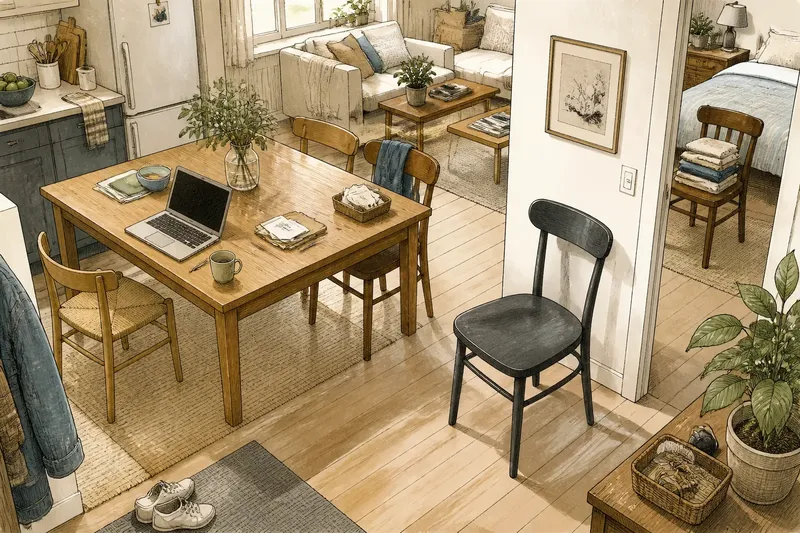
Shared routines are especially sensitive to changes in space and timing. Someone else may start using the kitchen table, borrow a charging cable, or need the bathroom during a familiar part of the morning. Repeating the old arrangement more firmly rarely restores it; the conditions have changed for someone else, too.
Start with the point of friction, not with an attempt to redesign the whole household. If two people need the same surface, identify which item must remain available and which can move. If the timing overlaps, agree on a cue or a handoff that makes the change visible rather than relying on silent guesses.
A small conversation can be more useful than creating a detailed household schedule. “I use the table for paperwork after dinner; could I leave the folder on the sideboard until then?” makes the request concrete and limited. If the arrangement is temporary, say so; a short-lived adjustment need not become a permanent rule by accident.
What if the routine feels harder than it used to?
Difficulty can come from added friction rather than a loss of interest. The notebook may be in another room, the exercise mat may be buried under laundry, or the task may now require a decision that it did not used to require. Each detail is minor on its own, which is why the accumulated effect can be easy to misread.
Notice what happens between the intention and the first action. Do you search for an object, wait for a quiet moment, decide among several versions of the task, or remember an extra preparation step? The first snag is often more useful to address than the task as a whole.
Remove one point of friction where practical. Leave the relevant book near the chair where you read, keep a pen with the paper you use, or decide in advance which of two reasonable options you will choose. Do not reorganize a room to solve a problem that a single moved object could answer. That sort of project can acquire its own paperwork.
How can you tell whether to adjust or let it pass?
One unusual day does not necessarily reveal a new pattern. A run of late evenings, a visitor, or a temporary change in workload can interrupt a routine without changing its longer-term shape. Before making a permanent adjustment, pay attention to what is recurring and what is plainly temporary.
A brief note can help if memory keeps turning a few exceptions into a sweeping verdict. For a short stretch, record only three things: the cue, whether the action happened, and what got in the way. No elaborate tracker is needed; a line on paper or a note on your phone will do. The point is to notice a repeated obstacle, not to produce a chart that demands regular maintenance.
Use the note to make one small decision. If the cue still works but the time does not, move the time. If the time is fine but the necessary object keeps wandering, give it a dependable home. If the routine still fits and the disruption was unusual, leave it alone.
Questions readers ask about changing routines?
How long should I wait before changing a routine?
There is no useful universal waiting period. Look for a repeated obstacle that matters to you, then make a small adjustment; a one-off disruption rarely needs a redesign.
Should I keep the old version of the routine?
Keep it if it still suits your life and its main cue remains available. If the old timing or setting no longer fits, retain the useful action and change the part that has become awkward.
What if I cannot identify the cue?
Notice what usually happens just before the action, including ordinary events such as arriving home, finishing a meal, or setting down a bag. If no dependable event appears, choose one that already happens naturally rather than adding a separate reminder system.
When should I stop trying to preserve a routine?
Stop preserving it in its old form when the purpose has changed or the routine creates more strain than value. You can keep what remains useful and let the rest go without treating that decision as a failure.
What should you avoid changing all at once?
Changing the cue, time, location, and size of an action together makes it hard to tell which adjustment helped. It also turns a modest routine into a fresh project with several new decisions attached. Choose the smallest change that addresses the obstacle you actually noticed.
It is not worth buying a planner, rearranging an entire room, or setting several alarms just to test whether a cue has gone stale. Those tools can be useful when they solve a specific problem, but they cannot make an unsuitable arrangement feel natural by force.
Familiar routines change at the edges before they announce themselves as new routines. Notice the cue that moved, the interruption that repeats, or the object that now takes too long to find. Then adjust that one part and see whether the ordinary action has a place in your day again. A routine does not need to return unchanged to remain familiar.